And showed me that a change of gears was a good investment of time: I got much more done in the five days after a weekend away than I would have in seven days of virtually uninterrupted work. But how was I going to manage it all the other weekends?
10 May 2014
If it's Sunday …: Reading Resets
A few Sundays ago, I woke up remembering how, when I was in graduate school, I developed a way of giving myself, every Sunday – I thought of it then as a little present, or a mini-vacation, but in these technologically more ‘advanced’ times we might just say that I found my personal reset button. It was a godsend at the time – and, when it came back to me last month, I couldn’t believe I’d ever let it slip away. It still works – wonders!
My discovery came in the early years of a Ph.D. program, when the work consisted mostly of reading, and plenty of it. Before I discovered my Sunday reset ploy, I, like most of my fellow students, worked almost all the time I wasn’t in class or eating or drinking coffee. Days off were few and far between, and – week in, week out – every day picked up right where the one before it had left off. It seemed the only way to get a break was to spend a weekend far away, and the rare occasions when I managed that, only showed me how much I needed something comparable all the other weekends of the year.
And showed me that a change of gears was a good investment of time: I got much more done in the five days after a weekend away than I would have in seven days of virtually uninterrupted work. But how was I going to manage it all the other weekends?
The solution came suddenly, one Sunday, a few decades ago, and it arrived full-fledged, with all the necessary details in place: instead of picking up on Sunday wherever I had left off the night before… I would read whatever new, previously unstarted book was calling out to me. The only requirement I imposed was that there had to be a good chance of finishing the book that same day.
Now, for me, that meant that the book had to be relatively short. I’ve never been a speed-reader. But, fortunately, shorter books were becoming more abundantly available. I didn’t select books with a maximum word- or page-count in mind, but I generally had an idea of what I could get through in a day and still have it feel like a vacation. That usually meant something more like a novella or short novel than a ‘full-length’ novel, and if I’d had an ideal page-count it might have been 150 pages – something in the neighborhood of 2000 ‘locations’ on a Kindle today.
I don’t always remember specifically which books I read on those Sundays. The ones I remember most clearly tended to be in French: Camus’s (first) posthumous novel, La mort heureuse; Stendhal’s Armance; a slim volume of televised conversations with Jacques Lacan. None of these sounds like highly promising ‘escape’ reading – but I’m sure I did my share of that, too. There were novels like the ones Graham Greene originally called ‘entertainments’, and repeated doses of Balzac and Henry James; there were plays and screenplays, and pulp fiction galore – all that I remember clearly was that the Sunday reading always did the trick. I came back to my regular reading on Monday morning feeling like a new man.
And now I’ve rediscovered that Sunday reboot button. I’ll save that for another blogpost on another day. For now, I’ll just say that the first book of my new era of Sundays was a surprising one, for me at least: Dostoevsky’s The Double …
And showed me that a change of gears was a good investment of time: I got much more done in the five days after a weekend away than I would have in seven days of virtually uninterrupted work. But how was I going to manage it all the other weekends?


04 April 2014
More Candles for Marguerite Duras
Today is the 100th anniversary of the birth of French writer-director Marguerite Duras.
Duras was born in French Indochina, near Saigon, in 1914, and spent virtually all of her adult life in France, where she died in 1996. Her complete works will span roughly 4000 pages in four volumes of the Bibliothèque de la Pléiade.
 Until the publication of L'amant (The Lover) in 1984 - Duras' first bestseller and winner of the Prix Goncourt - she had for four decades almost the status of an underground writer. When I began reading her in the 1970s, only two of her books were available as rack-sized paperbacks in France: the novel Moderato cantabile (1958) and the screenplay for Hiroshima mon amour (published in 1960). Today she has acquired the status of a 'classic' (today's birthday feels to me like one of those watershed French events, like the funeral of Sartre). Duras is perhaps the most modern of classics, if either of those words is still meaningful - and some younger readers now approach her with an element of trepidation. (In interviews, Duras seemed to feel that 'the young' would ultimately understand her best, and I think they will, if they will only read her.)
Although I never met Duras, I 'followed' her (see my explanation of this use of the word 'follow', and an earlier discussion of Duras, here ) for the last 20 years of her life. She remains in some ways the most immediate of the authors I refer to collectively as 'the 26' - so that it's especially difficult for me to write about her without writing about myself. But I've resolved to let this be her day - and the best way I know to do that is to point to a few of her books as possible means of access to the rest.
Let's repeat three titles I've already mentioned - Moderato cantabile, Hiroshima mon amour, L'amant - and add a few more: Le ravissement de Lol. V. Stein, Le Vice-Consul, India Song, L'amante anglaise, L'été 80, La douleur (War) and Ecrire. But you can start, or restart, almost anywhere...
More to come.
Duras was born in French Indochina, near Saigon, in 1914, and spent virtually all of her adult life in France, where she died in 1996. Her complete works will span roughly 4000 pages in four volumes of the Bibliothèque de la Pléiade.
Although I never met Duras, I 'followed' her (see my explanation of this use of the word 'follow', and an earlier discussion of Duras, here ) for the last 20 years of her life. She remains in some ways the most immediate of the authors I refer to collectively as 'the 26' - so that it's especially difficult for me to write about her without writing about myself. But I've resolved to let this be her day - and the best way I know to do that is to point to a few of her books as possible means of access to the rest.
Let's repeat three titles I've already mentioned - Moderato cantabile, Hiroshima mon amour, L'amant - and add a few more: Le ravissement de Lol. V. Stein, Le Vice-Consul, India Song, L'amante anglaise, L'été 80, La douleur (War) and Ecrire. But you can start, or restart, almost anywhere...
More to come.
18 March 2013
Readers' Choice Awards - BigAl's Books and Pals
Many regular readers of this blog know BigAl's Books and Pals as as a 'go-to' website specializing in reviews of independently published English-language books available on Kindle. I was reading and recommending the site (see my blogroll in the right-hand column) long before BigAl's generous and perceptive review of my book A Kiss Before You Leave Me last May. Now Al and company are doing even more for indie authors and readers. BigAl and the Pals explain:
In the twelve months ending February 28th, 2013, [we] received over 1,400 books to consider for review. Almost 300 of them were selected, read, and reviewed. From those we chose the books we felt stood out from the pack as exceptional examples of Indie (self-published and small press) writing and divided them into eleven categories....
For two weeks, starting March 18th at 10:00 Eastern Time and ending at Midnight Eastern Time on April 1st, we'll be asking readers to vote for the winner in each category. Winners will be announced the morning of Wednesday, April 3rd. We'll also have a giveaway with various prizes for those who vote.
Winners and nominees of "BigAl's Books and Pals 2012 Readers' Choice Awards" will feature on a special Readers' Choice page at Books and Pals for the next twelve months, with emphasis on the winner in each category.I hope you'll continue to support BigAl's Books and Pals in general and that you'll both support and benefit from this year's Readers' Choice Awards in particular. Voting is now under way.
16 July 2012
Simenon: Maigret and More
The biggest news in European ebooks last month, as I see it, was the release in France of the first 41 ebooks by Georges Simenon (1903 - 1989), the best-selling French-language author of the 20th century, and by some ways of reckoning the most prolific novelist of any era. Now and through 25 July 2012 the price of these French-language ebooks has been cut in half: individual ebooks now sell for less than four euros, three-packs for less than eight.
 I've read, and mostly admired, several dozens of Simenon's books. There are so many of them, and the experience of them is so inseparable from French or European life, that his readers (and especially those of us with a few decades of reading under our belts) find they can't keep track of the numbers. (Simenon himself couldn't say how many he'd written.)
If you read French, you're likely to know a great deal about Simenon already. To you I'll just mention two of my favorite Simenons, one featuring Inspector Maigret and one non-series novel. L'affaire Saint-Fiacre brings the seasoned, adult Maigret back to his childhood home to investigate a crime involving a noblewoman whom he once idealized. Le chat (which was memorably filmed with Simone Signoret and Jean Gabin) is a powerful study of a claustrophobic marriage. (The links provided are to Amazon.fr. Kindle users may want to check their usual Amazon store, and users of other e-readers can get more information at the 'Simenon en numérique' website.)
 And if you don't read French? There's an excellent selection of Simenon ebooks in translation--except that the US ebook prices for all the Maigrets available in English exceed the ceiling I've set for most linking from this blog. (See here for an earlier discussion of ebook prices, especially of the 'gouge zone'.) But consider, among the non-series Simenons available in e-format, the very early Tropic Moon (which will remind you of Heart of Darkness, in a good way), Act of Passion (which takes the form of a letter from a man convicted of murder to the examining magistrate who handled his case) or The President (Simenon's most overtly political novel).
And, since we're stressing the non-series novels (now referred to more and more as romans durs), let me mention the best recent piece I've found on them, by John McIntyre.
I'll close with a link to Simenon's 1955 Paris Review interview, which includes among its extensive riches a documentation of Simenon's work schedule and output that is if anything more amazing almost 60 years later. Among other things, Simenon wrote faster than many of us read. But in the process he created a world of indelible atmosphere and unforgettable relationships. As readers and as writers, we're still struggling to catch up.
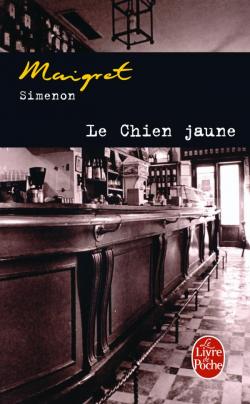
If you read French, you're likely to know a great deal about Simenon already. To you I'll just mention two of my favorite Simenons, one featuring Inspector Maigret and one non-series novel. L'affaire Saint-Fiacre brings the seasoned, adult Maigret back to his childhood home to investigate a crime involving a noblewoman whom he once idealized. Le chat (which was memorably filmed with Simone Signoret and Jean Gabin) is a powerful study of a claustrophobic marriage. (The links provided are to Amazon.fr. Kindle users may want to check their usual Amazon store, and users of other e-readers can get more information at the 'Simenon en numérique' website.)

And, since we're stressing the non-series novels (now referred to more and more as romans durs), let me mention the best recent piece I've found on them, by John McIntyre.
I'll close with a link to Simenon's 1955 Paris Review interview, which includes among its extensive riches a documentation of Simenon's work schedule and output that is if anything more amazing almost 60 years later. Among other things, Simenon wrote faster than many of us read. But in the process he created a world of indelible atmosphere and unforgettable relationships. As readers and as writers, we're still struggling to catch up.
29 January 2012
From 'Hello, UK!' to 'I'm Here All Week, Folks!': Bearing the Burden of Bestsellerdom
I happened to notice a few mornings back that my novel A Kiss Before You Leave Me had cropped up on the AmazonUK bestseller list for psychological fiction, between a World's Classics paperback of a Virginia Woolf novel and an ebook by Philip Roth.
 I'm not sure how either of those authors would have felt about our juxtaposition; not much worse, perhaps, than about the tête-à-tête (if that's the word for it) that I seem to have interrupted. (All I know is that, on the basis of my knowledge of the works in question, two of the three authors would have insisted on reporting that Woolf was on top. [You see how difficult it is to talk about bestsellers without getting into sexual content.])
I know, however, that I'm delighted to be on this UK list. And not just as an indication that the book is 'selling internationally'. For some very important part of me, the UK is at least one of the centers of my cultural universe, and has been ever since I first arrived in London at the age of 20. (If I told you what role I saw Judi Dench in the West End on that visit, it would be needlessly hurtful for one or both of us.)
Bestseller lists, we all know, don't mean very much.
Except when it's your book that gets noticed that way.
Well.
Because I, rightly or wrongly, attribute this 'movement' in the UK 'market' to the current (very international and very broadly 'cross-vendor') 'sunshine deal' on A Kiss Before You Leave Me, I'm extending the 'deal' for one additional week, in all markets and through all participating vendors. (I admit that this feels like an overly American response, but I don't want to be too hard on myself.)
Thank you to every reader in every country who's found room for my work on their digital 'shelves', on their virtual 'bedside table'.
(If you're still having trouble getting hold of Kiss, consult the links in the column to the right, or follow this link to the bitly 'bundle' and link on from there. Or 'comment' below, and let me know what you need. Finally, if you just arrived and want to know what this is all about, here are all my blogposts labelled 'A Kiss Before You Leave Me'--although, by this time, it might be easier for you just to break down and read the book...)

I know, however, that I'm delighted to be on this UK list. And not just as an indication that the book is 'selling internationally'. For some very important part of me, the UK is at least one of the centers of my cultural universe, and has been ever since I first arrived in London at the age of 20. (If I told you what role I saw Judi Dench in the West End on that visit, it would be needlessly hurtful for one or both of us.)
Bestseller lists, we all know, don't mean very much.
Except when it's your book that gets noticed that way.
Well.
Because I, rightly or wrongly, attribute this 'movement' in the UK 'market' to the current (very international and very broadly 'cross-vendor') 'sunshine deal' on A Kiss Before You Leave Me, I'm extending the 'deal' for one additional week, in all markets and through all participating vendors. (I admit that this feels like an overly American response, but I don't want to be too hard on myself.)
Thank you to every reader in every country who's found room for my work on their digital 'shelves', on their virtual 'bedside table'.
(If you're still having trouble getting hold of Kiss, consult the links in the column to the right, or follow this link to the bitly 'bundle' and link on from there. Or 'comment' below, and let me know what you need. Finally, if you just arrived and want to know what this is all about, here are all my blogposts labelled 'A Kiss Before You Leave Me'--although, by this time, it might be easier for you just to break down and read the book...)
Twitter Woes
First of all, this is addressed almost exclusively to people who have followed me on Twitter or who have an extreme interest in Twitter in general. Everybody else, please read a different post on Jascha Writes (click here for what is currently the most-read recent post; the top 10 of all time are listed at the foot of every page of the blog) or a good book (click here for a not-so-randomly-chosen title from a recent AmazonUK bestseller list of psychological fiction).
I hope I made it clear before that I love Twitter--or, to be more precise, that I love it much more than I ever expected to. I used it hassle-free for the better part of a year and hope for a speedy return of those halcyon days.
It's just that we've hit a snag. I can't quite get in an it's-not-you-it's-me here; all I know is that between (a) Twitter, (b) the third-party software I need to manage my account and (c) me--something isn't quite working. Twitter and my software disagree in their tallies of my followers and people followed, to such an extent that both the software and I are (temporarily, I hope) unable to follow back additional people. (Believe me, you don't want to hear about it in any more detail.)
I'm posting this here as an apology to any readers who may have been given the impression that I-- May I say, 'that I trifled with their readerly affections'?
Out there in the Twitterverse there are Tweeps who don't 'follow back'. There may even be a few who, after being followed, unfollow their followers so as to be able to attract additional followers more quickly.
Quite simply, I wouldn't do that. Not any of that. Along with everything else doglike about me, I definitely follow back.
I'm working to fix the problem. And, frankly, I'm also hoping for a fix from the people who brought us Tweet Adder 3.
For now, once more, my apologies.
Tweet on.
(That's what works for me. Even now.)
I hope I made it clear before that I love Twitter--or, to be more precise, that I love it much more than I ever expected to. I used it hassle-free for the better part of a year and hope for a speedy return of those halcyon days.
It's just that we've hit a snag. I can't quite get in an it's-not-you-it's-me here; all I know is that between (a) Twitter, (b) the third-party software I need to manage my account and (c) me--something isn't quite working. Twitter and my software disagree in their tallies of my followers and people followed, to such an extent that both the software and I are (temporarily, I hope) unable to follow back additional people. (Believe me, you don't want to hear about it in any more detail.)
I'm posting this here as an apology to any readers who may have been given the impression that I-- May I say, 'that I trifled with their readerly affections'?
Out there in the Twitterverse there are Tweeps who don't 'follow back'. There may even be a few who, after being followed, unfollow their followers so as to be able to attract additional followers more quickly.
Quite simply, I wouldn't do that. Not any of that. Along with everything else doglike about me, I definitely follow back.
I'm working to fix the problem. And, frankly, I'm also hoping for a fix from the people who brought us Tweet Adder 3.
For now, once more, my apologies.
Tweet on.
(That's what works for me. Even now.)
16 January 2012
'Discovering' Boris Akunin
Imagine a young aspirant on the lowest rung of the Czarist police bureaucracy, 20-year-old Erast Fandorin, recently orphaned, indisputably wet behind the ears, stumbling (embarrassing 'foundation garment' and all) into his first case, which seems to involve a peripatetic game of what later centuries will call 'Russian roulette' (but which Russians in 1876 still call 'American roulette')... and a femme fatale for whom he's no match. At the outset, there's little to suggest that Fandorin has a big future (a distinguished career extending 35 years and counting, in which he will never solve the same kind of puzzle twice) or that his first case, The Winter Queen, will launch one of the most successful 'franchises' in international crime fiction. But in the Erast Fandorin novels, and in the other works of Boris Akunin (born 1956), appearances are often deceiving. Fandorin, it turns out, is not only brilliant (we suspected that) but also an astonishing polyglot, a master of disguise, a lover and, on occasion and in the line of duty, a killer....
 I've been away from blogging for much longer than I intended, but at least I don't believe I've been wasting time. Among other things, I managed, in the course of my holiday hiatus, to 'discover' Akunin. I put 'discover' in quotation marks because, although I was reading him for the first time, he's been publishing novels for well over 20 years and is the best-known Russian author of genre fiction. He combines qualities of Dostoevsky and Nabokov, not to mention the great series novelists of other countries, whose success he rivals.
He's also amazingly prolific. His historical series about Erast Fandorin runs to a dozen volumes, many of them already published by Random House in the US and Hachette subsidiary Orion in the UK--and this does not count other series under the Akunin name or other works published under other names. ('Boris Akunin' is itself a pseudonym, and it would take an entire blogpost just to explore its multiple meanings.)
Different Akunin series have different organizational principles, slowly disclosed by Akunin through little clues, then made explicit in interviews and essays. The novels in one series, for example, illustrate what Akunin sees as the various possible sub-genres for a crime novel, at the rate of one novel for each type; another series parallels cinematic genres. In addition, different novels and series explore different eras: for example, the first Erast Fandorin novel, The Winter Queen, is set in 1876 and the latest in 1911; another series features Fandorin's British grandson in (mostly) the late 20th and early 21st centuries.
Three of Akunin's novels have been filmed (lavishly, by all accounts) in Russia; The Winter Queen is currently getting the Hollywood treatment, for better or worse.
If you'd like to experience for yourself what all the excitement is about, I'd recommend to US readers this trade-paperback edition, and to UK readers this ebook edition, of The Winter Queen. (US customers of iBooks may find this link useful because of a database peculiarity that makes Akunin more difficult to search for otherwise; check prices carefully.)

He's also amazingly prolific. His historical series about Erast Fandorin runs to a dozen volumes, many of them already published by Random House in the US and Hachette subsidiary Orion in the UK--and this does not count other series under the Akunin name or other works published under other names. ('Boris Akunin' is itself a pseudonym, and it would take an entire blogpost just to explore its multiple meanings.)
Different Akunin series have different organizational principles, slowly disclosed by Akunin through little clues, then made explicit in interviews and essays. The novels in one series, for example, illustrate what Akunin sees as the various possible sub-genres for a crime novel, at the rate of one novel for each type; another series parallels cinematic genres. In addition, different novels and series explore different eras: for example, the first Erast Fandorin novel, The Winter Queen, is set in 1876 and the latest in 1911; another series features Fandorin's British grandson in (mostly) the late 20th and early 21st centuries.
Three of Akunin's novels have been filmed (lavishly, by all accounts) in Russia; The Winter Queen is currently getting the Hollywood treatment, for better or worse.
If you'd like to experience for yourself what all the excitement is about, I'd recommend to US readers this trade-paperback edition, and to UK readers this ebook edition, of The Winter Queen. (US customers of iBooks may find this link useful because of a database peculiarity that makes Akunin more difficult to search for otherwise; check prices carefully.)
14 December 2011
Ed McBain and Jo Nesbø, and a P.S. on Exclusivity
Jo Nesbø (born 1960) must be the crime novelist I write about most often here, and I suspect I've never even mentioned Ed McBain (1926-2005; also known as Evan Hunter, the name under which he wrote Blackboard Jungle and the screenplay for Hitchcock's The Birds). So when a new-to-the-US Nesbø novel goes on sale on the same day that a dozen of McBain's 87th Precinct mysteries, some of them over 50 years old, become available on Kindle (in the US)--you might expect me to cover the 'new' Nesbø and save the 'old' McBains for another day.
 Actually, both writers are important to me. Nesbø's the newest writer I'm fervently 'following'; I followed McBain almost as devotedly for the last 20 years of his life and went to great lengths to find and read every last 87th Precinct and Matthew Hope novel from McBain's backlist. McBain seemed to write faster than Nesbø does, and a McBain novel is faster to read than a Nesbø; McBain's Steve Carella looks like a particularly straight arrow if you contrast him with Nesbø's antiheroic Harry Hole; but both writers are significant masters of the police procedural novel.
Today's new Nesbø is Harry Hole's eighth case, The Leopard, and it is very much a follow-up to The Snowman. (For the Harry Hole lineup, see here; for more on Nesbø, continue here.) It's another serial-killer novel, and, if anything, even more violent than its predecessor. Between the two books, Harry has left Oslo and begun a new life in Hong Kong. He has to be fetched back home to help his old colleagues unravel an unusually complicated case: you may find that it looks like Thomas Harris on the outside but more like Christie or Ellery Queen at its core (which, for me, is 'a good thing').
If you've read The Snowman, you probably know whether you want to read The Leopard. If you're new to Nesbø, start with the earliest available novel in the series. (Again, they're all listed here; for US readers of ebooks, the earliest currently available is The Redbreast, which introduces characters who appear in all the subsequent books.)
I should mention, for the benefit of newer readers of this blog, that I've vowed not to advertise ebooks that I consider to be overpriced, and I've encouraged others not to pay double-digit prices for ebooks. That's why I link to the hardback edition of The Leopard, not the ebook. I consider even The Snowman to be overpriced in ebook in the US, although the price will probably come down in the months ahead. [UPDATE: As of 18 January 2012, the US publisher has lowered the ebook prices of each of these novels to $9.99.]
Alternatively, consider taking advantage of Amazon.com's reduced prices for one of the two earliest McBain novels just released, The Mugger (1956) or The Con Man (1957), just $4.99 each for Kindle. They're early books, but in them McBain has already hit the stride he maintained through over 50 novels in the 87th Precinct series alone. Before Hill Street Blues and before all the Law and Orders and all the C.S.I.s--and grittier than any of them--there was the ongoing saga of squad room and crime scene, extending into the private lives of the dozen or so police detectives in a single precinct in a city that doesn't call itself New York but that corresponds to New York in every detail. (Show business trivia: Q: What was Gena Rowlands' breakthrough role? A: Arguably, as Steve Carella's wife Teddy in the 1960-61 TV series 87th Precinct, adapted from the McBain novels.) In every novel there are two or three storylines that may well never converge--just like the storylines in real life…
Print editions of all 12 McBains (and the others available for Kindle next week and the week after) will appear in 2012 and will be distributed throughout the US book trade. (McBain's novels about attorney Matthew Hope, beginning with Goldilocks, will follow in September 2012.) But the ebooks will remain Kindle exclusives for the foreseeable future. The publisher, after all, is Thomas & Mercer, Amazon's new crime imprint.
(One side benefit of Amazon's new investment in [or of] McBain is the page Perspectives on McBain, where Stephen King, Lawrence Block and many others assess their indebtedness to him.)
P.S.: Exclusivity, a budding issue at Amazon, is not necessarily a good thing. I, like most other independent authors, have the option of giving Amazon the exclusive right to distribute A Kiss Before You Leave Me for at least three months. Kiss would be enrolled in a new program that lends ebooks for free to Amazon Prime members, and I'd receive a prorated share of a multimillion-dollar royalty package set aside by Amazon--but I'd have to pull Kiss from the Apple iBookstore, Sony's Reader Store, Barnes & Noble and Kobo. No one of those stores sells as many copies of Kiss as the various Amazons combined--but ebooks should work for access, not exclusivity. Excluding those other vendors would mean limiting the access of readers who depend on an EPUB-friendly device--the majority of ebook readers internationally. I don't fault Amazon for offering exclusive terms--but exclusivity would not be the best arrangement for me and my readers.

Today's new Nesbø is Harry Hole's eighth case, The Leopard, and it is very much a follow-up to The Snowman. (For the Harry Hole lineup, see here; for more on Nesbø, continue here.) It's another serial-killer novel, and, if anything, even more violent than its predecessor. Between the two books, Harry has left Oslo and begun a new life in Hong Kong. He has to be fetched back home to help his old colleagues unravel an unusually complicated case: you may find that it looks like Thomas Harris on the outside but more like Christie or Ellery Queen at its core (which, for me, is 'a good thing').
If you've read The Snowman, you probably know whether you want to read The Leopard. If you're new to Nesbø, start with the earliest available novel in the series. (Again, they're all listed here; for US readers of ebooks, the earliest currently available is The Redbreast, which introduces characters who appear in all the subsequent books.)
 |
| First edition (Permabooks [imprint of Pocket Books], 1956) |
Alternatively, consider taking advantage of Amazon.com's reduced prices for one of the two earliest McBain novels just released, The Mugger (1956) or The Con Man (1957), just $4.99 each for Kindle. They're early books, but in them McBain has already hit the stride he maintained through over 50 novels in the 87th Precinct series alone. Before Hill Street Blues and before all the Law and Orders and all the C.S.I.s--and grittier than any of them--there was the ongoing saga of squad room and crime scene, extending into the private lives of the dozen or so police detectives in a single precinct in a city that doesn't call itself New York but that corresponds to New York in every detail. (Show business trivia: Q: What was Gena Rowlands' breakthrough role? A: Arguably, as Steve Carella's wife Teddy in the 1960-61 TV series 87th Precinct, adapted from the McBain novels.) In every novel there are two or three storylines that may well never converge--just like the storylines in real life…
Print editions of all 12 McBains (and the others available for Kindle next week and the week after) will appear in 2012 and will be distributed throughout the US book trade. (McBain's novels about attorney Matthew Hope, beginning with Goldilocks, will follow in September 2012.) But the ebooks will remain Kindle exclusives for the foreseeable future. The publisher, after all, is Thomas & Mercer, Amazon's new crime imprint.
(One side benefit of Amazon's new investment in [or of] McBain is the page Perspectives on McBain, where Stephen King, Lawrence Block and many others assess their indebtedness to him.)
P.S.: Exclusivity, a budding issue at Amazon, is not necessarily a good thing. I, like most other independent authors, have the option of giving Amazon the exclusive right to distribute A Kiss Before You Leave Me for at least three months. Kiss would be enrolled in a new program that lends ebooks for free to Amazon Prime members, and I'd receive a prorated share of a multimillion-dollar royalty package set aside by Amazon--but I'd have to pull Kiss from the Apple iBookstore, Sony's Reader Store, Barnes & Noble and Kobo. No one of those stores sells as many copies of Kiss as the various Amazons combined--but ebooks should work for access, not exclusivity. Excluding those other vendors would mean limiting the access of readers who depend on an EPUB-friendly device--the majority of ebook readers internationally. I don't fault Amazon for offering exclusive terms--but exclusivity would not be the best arrangement for me and my readers.
08 December 2011
Links, and Links: Italian, Spanish, International, Reciprocal
A week ago today, Amazon opened online Kindle stores in Italy and Spain. This means that residents of those countries can now buy Kindles locally (Italian link here, Spanish link here) and have immediate access at Amazon.it and Amazon.es, respectively, to close to a million ebooks--in Italian, Spanish, English and other languages (including Catalán, Galician and Basque)--including tens of thousands of free ebooks. Even the new Kindles themselves are polyglot: the user selects the language for menus, on-screen messages, default dictionary and such. And, like all other Kindle stores, the new ones for Italy and Spain offer free apps for customers who prefer to read ebooks on their laptops, smartphones or tablets.
The opening of a Kindle store in-country has always been a milestone in the 'maturing' of a country's ebook market. And there are implications for the rest of the world, too (as we've noted in talking about the coming of Kindle stores to Germany and France): among other things, the author of A Kiss Before You Leave Me will sell more copies of it in Italy and Spain, and Amazon customers around the world will have improved access to free ebooks in Italian (example here) and Spanish (example here of a work we've mentioned before).
Indeed, although I do welcome (on behalf of all independent authors and publishers of ebooks) new Italian and Spanish readers, along with all other readers internationally--the riches of Italian and Spanish literature and culture in general are so great that I suggest that the rest of us might want to respond, more than we have in the past, to their welcome to us. Let me just mention, in addition to the works of Pirandello and Cervantes for which I've provided links above, three of the greatest reads of the last few decades, all of them made to order for the book lover in you: Umberto Eco's The Name of the Rose, Arturo Pérez-Reverte's The Club Dumas and Carlos Ruiz Zafón's The Shadow of the Wind. In addition to whatever else these novels have in common, they each have a power to fascinate and intrigue that cannot be contained within any one nation's borders. If there's a title in the bunch that's new to you, please check it out. And please share your favorites with the rest of us.
The opening of a Kindle store in-country has always been a milestone in the 'maturing' of a country's ebook market. And there are implications for the rest of the world, too (as we've noted in talking about the coming of Kindle stores to Germany and France): among other things, the author of A Kiss Before You Leave Me will sell more copies of it in Italy and Spain, and Amazon customers around the world will have improved access to free ebooks in Italian (example here) and Spanish (example here of a work we've mentioned before).
Indeed, although I do welcome (on behalf of all independent authors and publishers of ebooks) new Italian and Spanish readers, along with all other readers internationally--the riches of Italian and Spanish literature and culture in general are so great that I suggest that the rest of us might want to respond, more than we have in the past, to their welcome to us. Let me just mention, in addition to the works of Pirandello and Cervantes for which I've provided links above, three of the greatest reads of the last few decades, all of them made to order for the book lover in you: Umberto Eco's The Name of the Rose, Arturo Pérez-Reverte's The Club Dumas and Carlos Ruiz Zafón's The Shadow of the Wind. In addition to whatever else these novels have in common, they each have a power to fascinate and intrigue that cannot be contained within any one nation's borders. If there's a title in the bunch that's new to you, please check it out. And please share your favorites with the rest of us.
30 November 2011
My Teachers
This has not been a year, in the US or elsewhere, in which teachers (or other public-sector workers) have always been given their due. I've been thinking about this for a long time, about my or our debt to teachers, about the impossibility of ever doing justice to them, about what first step I might take in the face of that impossibility…
What I've come up with is an obvious first step. And, imperfect as it is, let me dare to hope that it, or something like it, will catch on. As an Internet meme. Or in 'real' conversations, in 'real life'.
My proposal: name your teachers.
We readily name our favorite authors, in a list that, if we are authors ourselves, is sometimes called a list of our influences. (I put together such a list as part of a larger meme on Facebook almost three years, and I refer to it here constantly as 'the 26'.) But what about those other influences, our teachers?
In my version of this list, I've decided not to limit myself to public school teachers, or even to people with whom I've come into contact in classrooms or lecture halls of whatever sort. I've decided to leave aside formal taxonomies, both as criteria for inclusion and as determinants for organizing the list. All that matters is that these are the names of people from whom I've learned--from them, directly, and not just from their writings, say.
Finally, the list is not exhaustive. My lists never are. What I intend is simply to acknowledge that I owe a debt, a student's debt, to each of these 11, as well as to many more.
The names:
Here, elsewhere, in writing, aloud… name your teachers. (It's your list that has meaning for you, much more than mine.)
It's a beginning.
What I've come up with is an obvious first step. And, imperfect as it is, let me dare to hope that it, or something like it, will catch on. As an Internet meme. Or in 'real' conversations, in 'real life'.
My proposal: name your teachers.
We readily name our favorite authors, in a list that, if we are authors ourselves, is sometimes called a list of our influences. (I put together such a list as part of a larger meme on Facebook almost three years, and I refer to it here constantly as 'the 26'.) But what about those other influences, our teachers?
In my version of this list, I've decided not to limit myself to public school teachers, or even to people with whom I've come into contact in classrooms or lecture halls of whatever sort. I've decided to leave aside formal taxonomies, both as criteria for inclusion and as determinants for organizing the list. All that matters is that these are the names of people from whom I've learned--from them, directly, and not just from their writings, say.
Finally, the list is not exhaustive. My lists never are. What I intend is simply to acknowledge that I owe a debt, a student's debt, to each of these 11, as well as to many more.
The names:
- Jim Carpenter
- Paul de Man
- Jacques Derrida
- Shoshana Felman
- Charles Hulbert
- Elsie Hulbert
- Richard C. Hulbert
- Anthony Korahais
- John Neubauer
- Helen Sample
- René Wellek
Here, elsewhere, in writing, aloud… name your teachers. (It's your list that has meaning for you, much more than mine.)
It's a beginning.
28 November 2011
One Definition of a Classic, and the Mark of Cain
A few extra days away from blogging (I hope, by the way, that those of you who were celebrating Thanksgiving in the US were able to do so happily and in good company and without too many of the distractions that pass for, and sometimes even become, 'the news')--a few extra days away from blogging and I lose my sense of direction, or am pulled in too many directions at once, which is almost the same thing.
But I just read a few lines by Italo Calvino (1923-1985) which express so clearly what I'd been hoping to express in some future post, that I can't resist quoting him for you here. The lines I'll quote are from the 1981 essay 'Why Read the Classics?', now the title essay in a posthumous compilation translated by Martin McLaughlin, and they form the ninth of Calvino's 14 definitions of 'a classic':
We're far removed from 'Read this--it's good for you', 'Read this--after all, I [or: your parents, your grandparents, everyone…] had to read it', or 'Read this--it's really quite well done'.
The elements of originality and surprise were in fact precisely what I had in mind when I mentioned Thomas Paine and the Bible at the end of my Jane Austen post of a couple of weeks ago. They may not be the best, or the most effective, examples for any given reader. But, as an experiment, I would invite you to read, as if for the first time, the story of Cain and Abel in Genesis 4:1-16, paying particular attention to what 'the mark of Cain' becomes in this account. Contrast this with what many--let's say non-readers, or pre-readers--know or believe they know about the mark of Cain. Even if the passage doesn't surprise you, you'll understand it as an example.
I'd appreciate hearing from you about this experiment, or about similar experiences you've had with other texts…
But I just read a few lines by Italo Calvino (1923-1985) which express so clearly what I'd been hoping to express in some future post, that I can't resist quoting him for you here. The lines I'll quote are from the 1981 essay 'Why Read the Classics?', now the title essay in a posthumous compilation translated by Martin McLaughlin, and they form the ninth of Calvino's 14 definitions of 'a classic':
Classics are books which, the more we think we know them through hearsay, the more original, unexpected and innovative we find them when we actually read them.Calvino puts his finger on the strange commingling of (supposed) familiarity and unheard-of-ness that, for me, is so characteristic of my experience of 'classic' works of whatever era.
We're far removed from 'Read this--it's good for you', 'Read this--after all, I [or: your parents, your grandparents, everyone…] had to read it', or 'Read this--it's really quite well done'.
 |
| Gustave Doré, The Death of Abel |
I'd appreciate hearing from you about this experiment, or about similar experiences you've had with other texts…
21 November 2011
Heinrich von Kleist: Not Accounted For
Heinrich von Kleist (1777-1811) died on this day, 200 years ago, at the age of 34.
He wrote eight plays and eight short stories or novellas, along with short essays, journalism and letters. He wrote for a period of about 10 years. You could read all of his surviving writings in a couple of weeks.
Kleist is most commonly spoken of as some combination of the following:
For me, Kleist is one of 'the 26'--and yet, as I look back through the archives of Jascha Writes, I find that I have mentioned him only fleetingly, most recently in September in a post about Shakespeare in which I say only that Kleist is 'unclassifiable' but that his eight dramas for the most part still 'hold the stage' in German-speaking countries.
Because I suspect that most of my US readers have little direct experience with Kleist, I'm tempted to 'situate' him for them by likening him to potentially comparable writers (Büchner, Rimbaud, Kafka…) or telling stories of his clashes with better-established writers of his own time (Goethe…) or hinting at his intertextual relationships (to Sophocles, Molière, E. L. Doctorow--to say nothing of French director Eric Rohmer, who based one of his best films of the 1970s on Kleist's novella 'Die Marquise von O…'). But all of this feels like one more way of failing Kleist. (At the same time, it's worth noting that Kleist stands up to all the implied comparisons.)
Another way of failing Kleist, strangely enough, would be my usually automatic approach of sketching out my own 'relationship' with the writer in question. Does it really matter that I read him most memorably in the late 1960s and mid-1970s? That I feel I can never really finish reading Kleist, of all authors?
What I can't not share with you, though, is the fact that this author, so closely associated with tragedy and violence, also wrote what is usually considered the greatest German stage comedy, The Broken Jug. To say nothing (literally) of Amphitryon. Or Penthesilea. Or Prinz Friedrich von Homburg. Unforgettable, each in its own unaccountable way.
And those are all stage works. For those who are ready to go out and read Kleist in English, let me recommend the Penguin edition of his short fiction. Beware, though, of plot spoilers in the introduction, which at one point also takes Kleist to task (and at great length) for a plot twist in 'Michael Kohlhaas' which the editors find ill-considered and which for me makes the novella the masterpiece that most of us agree it is. (Whichever side of that question you come down on, the odds are you won't appreciate being made aware of the plot twist before you read the novella itself.)
Kleist's texts in the original German are readily available as free ebooks from Amazon.com or Amazon.de --although I benefited from the one-volume Kleist 'reader' made available this year in the series Fischer Klassik.
The German press, which overlaps with the German-language Internet, has been full of Kleist memorials and essays throughout this year and for the last few days in particular. I've been helped most (not as a blogger but as what I might call a mourner) by the contributions to the online edition of Die Zeit in general but by a piece by Volker Weidermann appearing at the FAZ website in particular.
He wrote eight plays and eight short stories or novellas, along with short essays, journalism and letters. He wrote for a period of about 10 years. You could read all of his surviving writings in a couple of weeks.
Kleist is most commonly spoken of as some combination of the following:
- a genius
- a master of the German language
- a misfit
- violent
- 'modern', or impossibly ahead of his time, or 'timeless'
- in crisis
- 'conflicted'
- 'his own worst enemy'
- dangerous
- 'political'
- a rebel
- 'transgressive'
For me, Kleist is one of 'the 26'--and yet, as I look back through the archives of Jascha Writes, I find that I have mentioned him only fleetingly, most recently in September in a post about Shakespeare in which I say only that Kleist is 'unclassifiable' but that his eight dramas for the most part still 'hold the stage' in German-speaking countries.
Because I suspect that most of my US readers have little direct experience with Kleist, I'm tempted to 'situate' him for them by likening him to potentially comparable writers (Büchner, Rimbaud, Kafka…) or telling stories of his clashes with better-established writers of his own time (Goethe…) or hinting at his intertextual relationships (to Sophocles, Molière, E. L. Doctorow--to say nothing of French director Eric Rohmer, who based one of his best films of the 1970s on Kleist's novella 'Die Marquise von O…'). But all of this feels like one more way of failing Kleist. (At the same time, it's worth noting that Kleist stands up to all the implied comparisons.)
Another way of failing Kleist, strangely enough, would be my usually automatic approach of sketching out my own 'relationship' with the writer in question. Does it really matter that I read him most memorably in the late 1960s and mid-1970s? That I feel I can never really finish reading Kleist, of all authors?
What I can't not share with you, though, is the fact that this author, so closely associated with tragedy and violence, also wrote what is usually considered the greatest German stage comedy, The Broken Jug. To say nothing (literally) of Amphitryon. Or Penthesilea. Or Prinz Friedrich von Homburg. Unforgettable, each in its own unaccountable way.
And those are all stage works. For those who are ready to go out and read Kleist in English, let me recommend the Penguin edition of his short fiction. Beware, though, of plot spoilers in the introduction, which at one point also takes Kleist to task (and at great length) for a plot twist in 'Michael Kohlhaas' which the editors find ill-considered and which for me makes the novella the masterpiece that most of us agree it is. (Whichever side of that question you come down on, the odds are you won't appreciate being made aware of the plot twist before you read the novella itself.)
Kleist's texts in the original German are readily available as free ebooks from Amazon.com or Amazon.de --although I benefited from the one-volume Kleist 'reader' made available this year in the series Fischer Klassik.
The German press, which overlaps with the German-language Internet, has been full of Kleist memorials and essays throughout this year and for the last few days in particular. I've been helped most (not as a blogger but as what I might call a mourner) by the contributions to the online edition of Die Zeit in general but by a piece by Volker Weidermann appearing at the FAZ website in particular.
18 November 2011
Patricia Highsmith, in Good Company (and Not a Ripley in Sight)
Patricia Highsmith (1921-1995) used to come up in (my) conversation most often as an example of a US-born author far more prized in the UK and on the continent of Europe than in the US. The American reading public, usually attracted to authors whose books have been successfully adapted for the big screen, seemed to make an exception for Highsmith, whose first novel, Strangers on a Train (1950), was almost immediately turned into one of Alfred Hitchcock's most memorable films (1951). She went on to publish a total of 22 novels (including The Talented Mr Ripley [1955] and four follow-ups) and seven volumes of short stories, and many of the novels were filmed during her lifetime. US publishers offered rack-sized paperback editions of Highsmith only now and then, whereas she's been a staple of comparable editions in the UK, France and German-speaking countries for 40 years or so. (She lived in Europe from 1963 until her death.)
The success of Anthony Minghella's 1999 film version of The Talented Mr Ripley seemed finally to put Highsmith on the map for US readers--and her arrival in multiple new US ebook editions this year can only help.
A couple of months ago, Highsmith's superb first collection of short fiction, Eleven (1970; also known as The Snail-Watcher and Other Stories) and one of her more accessible stand-alone novels, the twice-filmed Cry of the Owl (1962), appeared in Kindle and EPUB editions.
 Now comes the newest Highsmith book to be available for Kindle and nook: The Tremor of Forgery (1969), often cited as her best novel--so cited, for example, by Graham Greene, who knew a thing or two about moral ambiguities and 'apprehensive' emotional climates in the world of expatriates. In atmosphere, Tremor will remind some readers of the Camus of The Stranger (also known as The Outsider or L'étranger), others of Paul Bowles (The Sheltering Sky; Bowles was another US-born novelist to whom international readers were more loyal than were readers stateside)--and not just because of Tremor's North African setting. Highsmith's protagonist is Howard Ingham, an American writer who goes to Tunisia to work on a screenplay and, when the film project collapses, stays on to work on a novel. He becomes entangled in (or, it seems at times, liberated by) moral ambiguities. There's a crime or two, and there's seepage in both directions through whatever membrane might separate Ingham's life and work.
For fans of Highsmith (or of Bowles, Greene and Camus), or of 'international' fiction in general, The Tremor of Forgery is a promising choice. But let me mention two other crime classics now available as ebooks, from two grand masters of the Golden Age of crime fiction in Great Britain.
First, Green for Danger (1944) by Christianna Brand (1907-1988). Murder in an operating room during World War II. The quintessential fair-play classic puzzle, and Brand's best-known book. Memorably filmed (1946) with Alastair Sim as Inspector Cockrill.
Second, The Franchise Affair (1948) by Josephine Tey (1896-1952). Half-serious caveat: this is the most nearly Highsmithian novel by the always inventive Tey--and, curiously, the only Tey novel currently available as an ebook in the US. Still, it was named by the Crime Writers' Association in 1990 as one of the 100 best crime novels of all time. A young woman accuses two other women, mother and daughter, of holding her prisoner and mistreating her for a month on their remote country estate. Is she the victim of false imprisonment and abuse, or are they the victims of a false accusation?
The success of Anthony Minghella's 1999 film version of The Talented Mr Ripley seemed finally to put Highsmith on the map for US readers--and her arrival in multiple new US ebook editions this year can only help.
A couple of months ago, Highsmith's superb first collection of short fiction, Eleven (1970; also known as The Snail-Watcher and Other Stories) and one of her more accessible stand-alone novels, the twice-filmed Cry of the Owl (1962), appeared in Kindle and EPUB editions.

For fans of Highsmith (or of Bowles, Greene and Camus), or of 'international' fiction in general, The Tremor of Forgery is a promising choice. But let me mention two other crime classics now available as ebooks, from two grand masters of the Golden Age of crime fiction in Great Britain.
First, Green for Danger (1944) by Christianna Brand (1907-1988). Murder in an operating room during World War II. The quintessential fair-play classic puzzle, and Brand's best-known book. Memorably filmed (1946) with Alastair Sim as Inspector Cockrill.
Second, The Franchise Affair (1948) by Josephine Tey (1896-1952). Half-serious caveat: this is the most nearly Highsmithian novel by the always inventive Tey--and, curiously, the only Tey novel currently available as an ebook in the US. Still, it was named by the Crime Writers' Association in 1990 as one of the 100 best crime novels of all time. A young woman accuses two other women, mother and daughter, of holding her prisoner and mistreating her for a month on their remote country estate. Is she the victim of false imprisonment and abuse, or are they the victims of a false accusation?
16 November 2011
Perry Mason Comes to Kindle
One of the strangest things about my childhood was the number of 25-cent Perry Mason paperbacks I went through while still in elementary school. I can't give you an exact count, but I'd say I'd bought and read at least 30 of them before the cover price went up to 35 cents and that before long I'd polished off most or all of the backlist and was following Mason's creator, Erle Stanley Gardner, in the pages of the Saturday Evening Post and in hardback. (My father subscribed to the Saturday Evening Post, but an issue would have cost all of 15 cents on newsstands; a new hardback Perry Mason, when I started buying them, went for $2.95.) Gardner, who was born in 1889, lived until 1970, and I followed him even longer: Gardner's last Mason novel appeared in 1973.
 It's hard for me to realize that today's readers under 30 are unlikely to remember defense attorney Perry Mason. But for the last several years only one Mason novel (out of a total of over 80) has been in print in the US; the TV series starring Raymond Burr ended its principal (nine-year) run in 1966 and survives today mostly on Netflix. I've heard it described as the longest-running courtroom drama series on television, and for most of those nine years I didn't miss an episode. But it was a flash in the pan in comparison with the series of mystery novels on which it was based.
The series began in 1933 with The Case of the Velvet Claws, which was coincidentally my first 25-cent Mason novel. For most of the following 37 years Gardner produced three or more novels a year. Some of them featured other detectives (like the private-eye duo of Donald Lam and Bertha Cool in books published under the pseudonym A.A. Fair, including Top of the Heap, also available as an ebook), but the majority of Gardner's books star Perry Mason, the brilliant defense attorney whose client is (almost?) never guilty. Mason is abetted by secretary Della Street and investigator Paul Drake; other recurring characters, as the series continues, are D.A. Hamilton Burger and Lieutenant Tragg of the LAPD.
Writers can end up paying a price to be as prolific as Gardner was. To some readers, especially in later years, Gardner seemed more like a book factory than a writer with texture, wit or literary sensibilities: these readers could still be impressed by his more ingenious plots (as in The Case of the Mythical Monkeys or The Case of the Spurious Spinster), but paperback reissues of the series, in the 1970s and 1980s, did not attract the same readership that the Mason novels had in earlier decades.
But flash forward to 2011: Perry Mason comes to Kindle, for the first time. Ten Mason novels are available as ebooks, including, from Gardner's first and perhaps richest decade, The Case of the Velvet Claws, The Case of the Curious Bride, The Case of the Substitute Face and The Case of the Perjured Parrot. If you've been missing Perry--or if you wonder what all the fuss was about--follow one of these links, click on the cover to look inside, and decide whether this might not be something for you.
Still to come: Josephine Tey, Christianna Brand... and Patricia Highsmith.

The series began in 1933 with The Case of the Velvet Claws, which was coincidentally my first 25-cent Mason novel. For most of the following 37 years Gardner produced three or more novels a year. Some of them featured other detectives (like the private-eye duo of Donald Lam and Bertha Cool in books published under the pseudonym A.A. Fair, including Top of the Heap, also available as an ebook), but the majority of Gardner's books star Perry Mason, the brilliant defense attorney whose client is (almost?) never guilty. Mason is abetted by secretary Della Street and investigator Paul Drake; other recurring characters, as the series continues, are D.A. Hamilton Burger and Lieutenant Tragg of the LAPD.
Writers can end up paying a price to be as prolific as Gardner was. To some readers, especially in later years, Gardner seemed more like a book factory than a writer with texture, wit or literary sensibilities: these readers could still be impressed by his more ingenious plots (as in The Case of the Mythical Monkeys or The Case of the Spurious Spinster), but paperback reissues of the series, in the 1970s and 1980s, did not attract the same readership that the Mason novels had in earlier decades.
But flash forward to 2011: Perry Mason comes to Kindle, for the first time. Ten Mason novels are available as ebooks, including, from Gardner's first and perhaps richest decade, The Case of the Velvet Claws, The Case of the Curious Bride, The Case of the Substitute Face and The Case of the Perjured Parrot. If you've been missing Perry--or if you wonder what all the fuss was about--follow one of these links, click on the cover to look inside, and decide whether this might not be something for you.
Still to come: Josephine Tey, Christianna Brand... and Patricia Highsmith.
14 November 2011
Ellery Queen - Back in the (Ebook) Mix
One of the little bits of housekeeping a blogger sometimes does is updating old posts so they reflect the current state of affairs. I usually put these revisions in brackets, beginning with the word 'update' and the date of the revision. For example, in a post from last May about free German-language ebooks, I mentioned the absence of any ebook edition of Das Kapital in the original German. Then, when I saw last week that there is now such an edition, I added links to bring the post up to date.
In the last week or so, however, I've discovered a number of 'new' ebooks, most of them in the genre of crime fiction, that call for a fresh post (or two) to herald their appearance, especially given the neglect to which their authors have been subjected in the ebook era and earlier. (True, something similar might be said about Marx himself; that's one reason I mentioned Das Kapital in the previous paragraph.)
The three Ellery Queen mysteries already available in Kindle and other eformats are now joined by The Roman Hat Mystery and Calamity Town.
The Roman Hat Mystery (1929) was the first Queen novel, written under the joint Queen pseudonym by cousins Manfred Lee and Frederic Dannay as a contest entry. It's very much in the 'problem in deduction' mode, a memorable investigation of a murder in the seats of a Broadway theatre, during a performance. The last time I read it (in the late 1980s) I could see it both as the springboard for the cousins' long career and as a typical book from a phase of that career that would soon be superseded by the more 'psychological' phase that attracted me to Queen and his creators in the first place.
 Calamity Town (1942) may have been the first Ellery Queen novel I read; it has always been one of my favorites, and it definitely stands up to rereading. It was the first of the Queen novels set in the fictitious New England town of Wrightsville, and much of its humor comes out of interactions between visiting New York sophisticate Ellery Queen (the character) and the tradition-bound townspeople. In retrospect, however, it's clear that what Queen was to find in Wrightsville, in the five novels that would eventually be set there (including Ten Days' Wonder, later memorably filmed by Claude Chabrol), had less to do with country-mouse-city-mouse humor than with psychological depth and new explorations of guilt and innocence: after a couple of trips to Wrightsville, Queen is not even recognizable as the pince-nez - wearing prig of the early 'problems in deduction'.
One of the intriguing things about blogging is that you really have no idea how far your 'voice' may reach. But, since my earlier post about Ellery Queen, one of the all-time most read at Jascha Writes, mentioned, in addition to the three Queen novels that had just appeared as ebooks only two more, and those two were precisely The Roman Hat Mystery and Calamity Town, let me mention here a few additional Queen novels as worthy of your attention and certainly of future release in eformat. In addition to Ten Days' Wonder (1948), I'd single out Cat of Many Tails (1949), The Finishing Stroke (1958) and Face to Face (1967). Of course, as I always say, you really don't have to choose....
Coming: the curious trio of Erle Stanley Gardner, Christianna Brand and Patricia Highsmith.
In the last week or so, however, I've discovered a number of 'new' ebooks, most of them in the genre of crime fiction, that call for a fresh post (or two) to herald their appearance, especially given the neglect to which their authors have been subjected in the ebook era and earlier. (True, something similar might be said about Marx himself; that's one reason I mentioned Das Kapital in the previous paragraph.)
The three Ellery Queen mysteries already available in Kindle and other eformats are now joined by The Roman Hat Mystery and Calamity Town.
The Roman Hat Mystery (1929) was the first Queen novel, written under the joint Queen pseudonym by cousins Manfred Lee and Frederic Dannay as a contest entry. It's very much in the 'problem in deduction' mode, a memorable investigation of a murder in the seats of a Broadway theatre, during a performance. The last time I read it (in the late 1980s) I could see it both as the springboard for the cousins' long career and as a typical book from a phase of that career that would soon be superseded by the more 'psychological' phase that attracted me to Queen and his creators in the first place.

One of the intriguing things about blogging is that you really have no idea how far your 'voice' may reach. But, since my earlier post about Ellery Queen, one of the all-time most read at Jascha Writes, mentioned, in addition to the three Queen novels that had just appeared as ebooks only two more, and those two were precisely The Roman Hat Mystery and Calamity Town, let me mention here a few additional Queen novels as worthy of your attention and certainly of future release in eformat. In addition to Ten Days' Wonder (1948), I'd single out Cat of Many Tails (1949), The Finishing Stroke (1958) and Face to Face (1967). Of course, as I always say, you really don't have to choose....
Coming: the curious trio of Erle Stanley Gardner, Christianna Brand and Patricia Highsmith.
11 November 2011
Jane Austen and the All-Access Pass
N.: Doctor, the blogger patient shows renewed signs of topical clumping. He wants to get out 500 words or less about Jane Austen's apparent 'accessibility', but if we're not careful we'll have a whole novel (you should pardon the expression!) on our hands, about the early history of the US paperback, and the role of cinema and TV adaptations, and Colin Firth and Laurence Olivier--
D.: And I know you'd just hate that part.
N.: I think we can leave the stereotypes aside, Doctor. Besides, you'll only encourage him. As I was saying: Colin Firth, Laurence Olivier; purists versus popularizers; the history of the UK publisher Hodder, Eric Ambler, the Hachette publishing empire, Le Livre de Poche; 'romance' fiction--
D.: Nurse novels?
N. (ignoring him): --genre fiction bias, gender fiction bias--
D.: Gender fiction bias? You mean 'chick lit'? Can we talk about chick flicks for a minute? How many chick flicks do you think I'd watch in a lifetime if I didn't need to get--
The patient regains consciousness and attempts to regain control. Obviously, it's not easy. Some radical surgery is called for--if possible, before 'great books'/'the canon'/'DWEMs' find their way into the mix.
Let's scroll back to 2006, the year in which UK publisher Hodder Headline, newly under the Hachette umbrella, issued new (and, to the best of my knowledge, its first) paperback editions of Jane Austen's principal six novels and set about getting them onto retailers' shelves--'wherever paperbacks are sold', as the advertising copy for just about any other popular paperback might read. (We're not talking about the 'classics' section, and we're including stores where nary a Penguin Classic is to be found.) There were discussions in the press about whether Hodder (more readily associated, historically, with the Saint, Eric Ambler and John le Carré) was trying to market Austen as 'chick lit', 'Regency romance', 'guilty pleasure'--and the expression 'dumbing down' came up more than once.
It was also in 2006 that Penguin included the six principal Austens in the much more extensive 'red' reissue (of that era)--new editions of what in competing Penguin editions were called 'classics' but here, in the 'red' series, appeared with no historical introductions, no annotations or other 'classics' cues, often a more generous typeface and better paper... and late-20th-century photographs or line drawings as cover illustrations. (Fairly or not, the Penguin 'red' Austen line, and indeed the entire red series, seemed not to get the same often-chilly reception that commentators reserved for the Hodder Austens.)
But whatever else one might say about the Hodder (and Penguin 'red') Austens, no one doubted that the public would buy them--and read them. (For the record, and in the interest of full disclosure, I admired but did not buy any of the Hodder six; I bought the Penguin 'red' Austens and inhaled the 'red' Northanger Abbey on my way back from the UK to Florida that year.) The Hodder six and the Penguin reds sold well, and, over five years later, are still in print--alongside their Penguin Classics counterparts.
In the case of Austen (and, I suspect, also of Dickens and Gibbon), the secret's in the marketing--but in the broadest sense of both terms. The real 'secret', to put it bluntly, is that we already have abundant access (and not just market access) to the 'classics' (whether we call them that or not). And the 'marketing' includes everything we do or witness every day that labels a text, or genre, or work of art--or anything or anyone else--as, let's say, 'our sort' or 'not quite our sort'.
Of course, it's easier to make the argument about Jane Austen, not only because of her--I would say her 'greatness', but I don't want to impose that judgement on you--but also because her accessibility has been tested and established. Not in every case is it so clear. But it's always worth exploring.
D.: And I know you'd just hate that part.
 |
| Your 'classic' Persuasion |
D.: Nurse novels?
N. (ignoring him): --genre fiction bias, gender fiction bias--
D.: Gender fiction bias? You mean 'chick lit'? Can we talk about chick flicks for a minute? How many chick flicks do you think I'd watch in a lifetime if I didn't need to get--
The patient regains consciousness and attempts to regain control. Obviously, it's not easy. Some radical surgery is called for--if possible, before 'great books'/'the canon'/'DWEMs' find their way into the mix.
 |
| Hodder Headline's Austen (2006) |
 |
| A different Persuasion ? Penguin 'red' cover |
But whatever else one might say about the Hodder (and Penguin 'red') Austens, no one doubted that the public would buy them--and read them. (For the record, and in the interest of full disclosure, I admired but did not buy any of the Hodder six; I bought the Penguin 'red' Austens and inhaled the 'red' Northanger Abbey on my way back from the UK to Florida that year.) The Hodder six and the Penguin reds sold well, and, over five years later, are still in print--alongside their Penguin Classics counterparts.
In the case of Austen (and, I suspect, also of Dickens and Gibbon), the secret's in the marketing--but in the broadest sense of both terms. The real 'secret', to put it bluntly, is that we already have abundant access (and not just market access) to the 'classics' (whether we call them that or not). And the 'marketing' includes everything we do or witness every day that labels a text, or genre, or work of art--or anything or anyone else--as, let's say, 'our sort' or 'not quite our sort'.
Of course, it's easier to make the argument about Jane Austen, not only because of her--I would say her 'greatness', but I don't want to impose that judgement on you--but also because her accessibility has been tested and established. Not in every case is it so clear. But it's always worth exploring.
Still to come, on other days: Thomas Paine, the Bible, and why we might want access to the 'classics'.
09 November 2011
A Different Approach: Peter Carey's 'Jack Maggs' for Dickens 2012
I've been recommending Peter Carey's 1997 novel Jack Maggs (UK ebook here, US paperback here) for almost as long as it's been around. I usually refer to it as a 'riff' on Dickens' Great Expectations--but I obviously need to be saying more, or less, because I'm not aware of a single reader I ever won for Jack Maggs that way.
Carey's US publisher clearly chose to go the way of saying less: the connection to Dickens has never been mentioned in American publicity for Maggs, perhaps on the assumption that huge chunks of its possible readership had never read Great Expectations, or hadn't reread it in so many years that they'd fear they'd forgotten too much of it, or possibly thought of it as an unpleasant bit of required reading best forgotten. Such generalizations are always tricky: most of the people with whom I've discussed this say they and everyone they know read it as teenagers and found it a difficult book to put down and one of their favorite Victorian novels. Still, it's long been customary to tell prospective readers that no familiarity with Dickens is required of readers of Maggs, and this is, in fact, true.
The next question that always comes up is whether Maggs is 'as good a novel' as G.E. Well, if we assume that such comparisons are meaningful, it would be only fair to point out that not many novels are as good as G.E. You can embrace Maggs without turning aside forever from G.E. Just as you can love Dickens and still find room in your heart for Carey.
Still, most readers of Maggs, I think, will focus on similarities and differences between it and G.E. Carey's title character has a great deal in common with Magwich, the escaped convict whom readers of G.E. first see encountering young Pip in the early pages of that novel. Maggs even has a Pip of his own, now (in 1837, when Carey's novel begins) grown up to be (like Dickens' Pip) something of a gentleman but (unlike Pip) neither hero nor protagonist.
For many readers, the most memorable and perhaps most disturbing character in Jack Maggs, however, will be a young journalist and emerging novelist, full of ambition but uncertain of success, newly married but already emotionally entangled with his beautiful young sister-in-law. His name isn't Dickens (it's Tobias Oates), but if you think your way back to 1837 and Dickens' situation prior to Oliver Twist, the resemblance is unmistakable. This is, needless to say, not Dickens as the most prized of all Victorian novelists: at best, it's an unsentimental (view of) Dickens, Dickens 'warts and all', or warts and then some.
Carey (born in Australia in 1943) has spoken of his long-standing interest in Dickens' Magwich, arguably the first Australian character in fiction. In this context, the first distinction between the two novels is that one is Victorian, the other postcolonial.
Still, for me, Jack Maggs is of particular interest as a novel that lets us think about how writers (like Dickens, or Tobias Oates, to name only two) rework their lived reality and transform it into fiction. (That's what I meant last time by 'a certain kind of novel'.) Maggs suggests how a writer somewhat like Dickens might have transformed a series of events with which his own century was not prepared to confront directly--to form a novel that it could comfortably embrace. So when we read Maggs we get Carey's take on the realities of the Victorian era--which include implicitly that era's own efforts to conceal what it cannot confront.
And we may also get some insight into the... Victorian? (neo)colonial? canonizing?... aspects of ourselves--which might begrudge Magwich, Maggs, or Carey a place at the table.
Is it the right reading for you for the Dickens centenary year ahead? I don't know. But it's my most contrarian recommendation. And, what's more, it's a good read.
Carey's US publisher clearly chose to go the way of saying less: the connection to Dickens has never been mentioned in American publicity for Maggs, perhaps on the assumption that huge chunks of its possible readership had never read Great Expectations, or hadn't reread it in so many years that they'd fear they'd forgotten too much of it, or possibly thought of it as an unpleasant bit of required reading best forgotten. Such generalizations are always tricky: most of the people with whom I've discussed this say they and everyone they know read it as teenagers and found it a difficult book to put down and one of their favorite Victorian novels. Still, it's long been customary to tell prospective readers that no familiarity with Dickens is required of readers of Maggs, and this is, in fact, true.
The next question that always comes up is whether Maggs is 'as good a novel' as G.E. Well, if we assume that such comparisons are meaningful, it would be only fair to point out that not many novels are as good as G.E. You can embrace Maggs without turning aside forever from G.E. Just as you can love Dickens and still find room in your heart for Carey.
Still, most readers of Maggs, I think, will focus on similarities and differences between it and G.E. Carey's title character has a great deal in common with Magwich, the escaped convict whom readers of G.E. first see encountering young Pip in the early pages of that novel. Maggs even has a Pip of his own, now (in 1837, when Carey's novel begins) grown up to be (like Dickens' Pip) something of a gentleman but (unlike Pip) neither hero nor protagonist.
For many readers, the most memorable and perhaps most disturbing character in Jack Maggs, however, will be a young journalist and emerging novelist, full of ambition but uncertain of success, newly married but already emotionally entangled with his beautiful young sister-in-law. His name isn't Dickens (it's Tobias Oates), but if you think your way back to 1837 and Dickens' situation prior to Oliver Twist, the resemblance is unmistakable. This is, needless to say, not Dickens as the most prized of all Victorian novelists: at best, it's an unsentimental (view of) Dickens, Dickens 'warts and all', or warts and then some.
Carey (born in Australia in 1943) has spoken of his long-standing interest in Dickens' Magwich, arguably the first Australian character in fiction. In this context, the first distinction between the two novels is that one is Victorian, the other postcolonial.
Still, for me, Jack Maggs is of particular interest as a novel that lets us think about how writers (like Dickens, or Tobias Oates, to name only two) rework their lived reality and transform it into fiction. (That's what I meant last time by 'a certain kind of novel'.) Maggs suggests how a writer somewhat like Dickens might have transformed a series of events with which his own century was not prepared to confront directly--to form a novel that it could comfortably embrace. So when we read Maggs we get Carey's take on the realities of the Victorian era--which include implicitly that era's own efforts to conceal what it cannot confront.
And we may also get some insight into the... Victorian? (neo)colonial? canonizing?... aspects of ourselves--which might begrudge Magwich, Maggs, or Carey a place at the table.
Is it the right reading for you for the Dickens centenary year ahead? I don't know. But it's my most contrarian recommendation. And, what's more, it's a good read.
07 November 2011
Housekeeping, and Returning Home
It was good to be on the road (mostly in Myrtle Beach, South Carolina); now it's even better to be back home. For some reason, however, it's taking me a while to get used to the time change (daylight saving time, elsewhere known as 'summer time', just ended in most of the United States; the November transition is supposed to be easier than the one in March)--and to communicating with everyone again.
I tweeted occasionally from Myrtle Beach, and wrote a few urgent emails, but otherwise focussed more on relaxing than on anything else. I believe I admitted on Twitter that my addiction to the new ABC-TV series Revenge had grown so intense that I started rereading The Count of Monte Cristo as a sort of readerly methadone. Dumas's best books are great to come home to, by the way, and this is surely one of his greatest. By the way, I'm just starting to look for the right methadone for my Once Upon a Time 'issues'.
What seemed to me like the biggest 'event' of last week in the world of (US) ebooks, an event that I would have blogged about last Friday if I'd been at home, was Amazon.com's introduction of its 'lending library', which offers free access to several thousands of ebooks for Amazon Prime customers who own Kindles. This is limited to a single free checkout per owner per month, and your browsing for books to check out begins on your Kindle, in the Kindle Store. For more information, click here.
The main problem I'm aware of as I return to blogging, is that topics are 'clumping': they're occurring to me in clusters that make them less manageable than usual, especially considering my resolution to limit individual posts to a maximum of 500 words.
For example, I've left a great deal unsaid about recommended reading for the Dickens centenary (even after previous posts here, here and here), all of which unsaid material clumps together in a supertopic that you might call 'Contrarian Responses to Dickens 2012'. But the first of those 'contrarian' recommendations--that you read, if you haven't already, Peter Carey's Jack Maggs (1997)--seems also to be part of a second supertopic, for which my best title so far is 'A Certain Kind of Novel' (referring to a kind that I encountered in an accidental cluster in the 1990s and that included, most memorably, both Jack Maggs and Barbara Vine's [i.e., Ruth Rendell's] The Chimney Sweeeper's Boy).
Please bear with me, though, and keep coming back. I promise to do my best to 'get it all down'... even if it takes a few attempts.
Barring some unforeseeable cyberevent (that stops the presses, so to speak), I'll pick up on Wednesday with Jack Maggs--and, although I won't be indiscreet about the plot per se, I'll be quite frank about the kind of novel as which I read it. If it's been out there for 14 years without your reading it, and it's as good as I think it is, then perhaps a little indiscretion about its subgenre is not too high a price to pay.
I tweeted occasionally from Myrtle Beach, and wrote a few urgent emails, but otherwise focussed more on relaxing than on anything else. I believe I admitted on Twitter that my addiction to the new ABC-TV series Revenge had grown so intense that I started rereading The Count of Monte Cristo as a sort of readerly methadone. Dumas's best books are great to come home to, by the way, and this is surely one of his greatest. By the way, I'm just starting to look for the right methadone for my Once Upon a Time 'issues'.
What seemed to me like the biggest 'event' of last week in the world of (US) ebooks, an event that I would have blogged about last Friday if I'd been at home, was Amazon.com's introduction of its 'lending library', which offers free access to several thousands of ebooks for Amazon Prime customers who own Kindles. This is limited to a single free checkout per owner per month, and your browsing for books to check out begins on your Kindle, in the Kindle Store. For more information, click here.
The main problem I'm aware of as I return to blogging, is that topics are 'clumping': they're occurring to me in clusters that make them less manageable than usual, especially considering my resolution to limit individual posts to a maximum of 500 words.
For example, I've left a great deal unsaid about recommended reading for the Dickens centenary (even after previous posts here, here and here), all of which unsaid material clumps together in a supertopic that you might call 'Contrarian Responses to Dickens 2012'. But the first of those 'contrarian' recommendations--that you read, if you haven't already, Peter Carey's Jack Maggs (1997)--seems also to be part of a second supertopic, for which my best title so far is 'A Certain Kind of Novel' (referring to a kind that I encountered in an accidental cluster in the 1990s and that included, most memorably, both Jack Maggs and Barbara Vine's [i.e., Ruth Rendell's] The Chimney Sweeeper's Boy).
Please bear with me, though, and keep coming back. I promise to do my best to 'get it all down'... even if it takes a few attempts.
Barring some unforeseeable cyberevent (that stops the presses, so to speak), I'll pick up on Wednesday with Jack Maggs--and, although I won't be indiscreet about the plot per se, I'll be quite frank about the kind of novel as which I read it. If it's been out there for 14 years without your reading it, and it's as good as I think it is, then perhaps a little indiscretion about its subgenre is not too high a price to pay.
28 October 2011
Nesbø, Harry and 'Phantom'
 |
| Jo Nesbø |
Q: How violent are the books? I'm not big on books about serial killers.... A: Only a few of the books to date actually involve serial killings. You definitely don't need to be a fan of, say, Thomas Harris to enjoy the Harry Hole books. Violence? When I read The Snowman, it struck me as the most violent book so far, with The Devil's Star a close second, but the violence never seems gratuitous (or purely genre-driven) to me. True, the books all involve homicide investigations, including at least some forensics. And Harry does manage to get roughed up quite frequently, even for a fictional detective.
Q: Suppose I'm the one reader who never got into Stieg Larsson's books? Or Henning Mankell's? Or.... A: Not a problem. Scandinavia is just a geographic region--not the best reason to read one author rather than another. Scandinavian crime novels are all different. Even Nesbø's own novels seem to me quite different from one another. Try one. You might like it. (I suggested The Redbreast as a starting place for US readers. But not because it's in any way 'typical'.)
 |
| The 9th Harry Hole novel German translation Die Larve (2011) |
Harry is a recovering alcoholic with memorable lapses; the new book involves the illegal drug trade in Oslo. Phantom, appropriately enough, brought me more highs and lows, as a reader, than any other Nesbø novel. And by lows I mean not disappointments but... let's say developments from which some readers may take a while to recover. Obviously I'm still working on my recovery, three days after finishing Phantom. And speaking of following--and serials--I'm already impatient for the next book in the series. I just realized: Harry Hole is a serial. The blogger is, at least sometimes, the last to know. (Inexcusable parenthesis, especially addressed to fans of Samuel Beckett: I've had my own I-can't-go-on-I'll-go-on oscillation with Phantom and its final scenes. Try, all readers of Phantom please try, this experiment on yourselves: count the number of days or hours after finishing Phantom before you start thinking about book ten in the series.)
Speaking of trying to remain spoiler-free: by some lucky accident, I managed to read the first several chapters of Phantom without knowing certain facts about the plot. I had read only the earliest, briefest descriptions released by Nesbø's German publisher, Ullstein--which have since been replaced by longer blurbs that continue to be discreet but reveal, among other things, how the set-up of the novel relates it to the others that preceded it. In other words, I was surprised--not bowled over, more delighted, mildly but quite 'pleasantly' surprised--by parts of the set-up with which almost every future reader may be familiar before starting the book. (It was, for me, the first of the book's 'highs'. It's a high you may still be able to share--if you restrict what you read and hear about the book between now and the time you read it.)
The whole experience made me dream of an alternative universe in which readers could approach each new book in a state of comparative innocence. In which publishers didn't feel they had to give anything away for the sake of making a sale. In which bloggers, even, rivalled one another in discretion.
I've far exceeded my allotted 500 words for the day--which can be justified not by anything I've communicated about the plot of Phantom (of which I'd vowed to reveal as little as possible) but perhaps by the fact that I'll be taking several days off from blogging (although not from Twitter). I'll be on the road, and if I weigh in here at all it will be only with a comment or two rather than a scheduled post. (By the way, I'm holding off on talking about book eight in the series until closer to its US release date.) Happy reading, listening and coffee-drinking, and happy living as well--until next time.
26 October 2011
Nesbø's Harry Hole: The Line-Up
 |
| US mass-market paperback, 2011 |
Because Nesbø and Harry Hole are still new to most US readers, I'd like to run through a few general reference points (to which I gave short shrift when trying to introduce the series last March). When I finally return to speak directly about Phantom, it will be to give it a spoiler-free rave, limited mostly to how you can intensify your enjoyment of it.
So. What do you need to know about Jo Nesbø? His name is pronounced 'yoo NESS-buh' in Norwegian but often simply 'Joe NEZZ-bo' in English. He was born in 1960 and trained as an economist. Was a successful soccer player but was permanently sidelined by injuries. Worked for about a decade as a stockbroker by day and rock musician by night (vocals and guitar with the band Di Derre). Best known as author of the Harry Hole novels but has published one stand-alone thriller (Headhunters) and the Doctor Proctor series of children's books.
And about Harry Hole (pronounced, to everyone's great relief, 'hah-ree HOO-lə')? He's an Oslo-based (later Hong Kong - based) police inspector (later ex- or acting), a recovering alcoholic. A loner in general, but capable of deep, loving, lasting-but-failed attachments. Smart. Surprisingly likeable.
There are nine novels to date in the series:
- The Bat
- The Cockroaches
- The Redbreast
- Nemesis
- The Devil's Star
- The Redeemer
- The Snowman
- The Leopard
- Phantom
Frequently asked questions begin:
Q: Do the books need to be read in order? A: All things being equal, it's desirable. Advice to US readers: start with number 3, The Redbreast [link UPDATED 5 March 2012], and read the subsequent novels in order, in so far as availability permits. The first two novels are less important to the rest than are 3 through 9 among themselves. The Bat Man is set in Australia and is referred to often in recent Hole books because it establishes Harry as one of the few Norwegians with hands-on experience hunting down a serial killer. (It was the first Nesbø I read, and, although I kept going after that, I find it the least engaging book in the series.) The second, The Cockroaches, is set in Bangkok. All the rest are set principally in Oslo and form parts of various plot arcs that interconnect them.
Subscribe to:
Posts (Atom)


