Showing posts with label ebook prices. Show all posts

16 July 2012

Simenon: Maigret and More

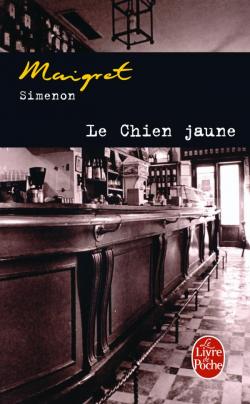
The biggest news in European ebooks last month, as I see it, was the release in France of the first 41 ebooks by Georges Simenon (1903 - 1989), the best-selling French-language author of the 20th century, and by some ways of reckoning the most prolific novelist of any era. Now and through 25 July 2012 the price of these French-language ebooks has been cut in half: individual ebooks now sell for less than four euros, three-packs for less than eight.

I've read, and mostly admired, several dozens of Simenon's books. There are so many of them, and the experience of them is so inseparable from French or European life, that his readers (and especially those of us with a few decades of reading under our belts) find they can't keep track of the numbers. (Simenon himself couldn't say how many he'd written.)

If you read French, you're likely to know a great deal about Simenon already. To you I'll just mention two of my favorite Simenons, one featuring Inspector Maigret and one non-series novel. L'affaire Saint-Fiacre brings the seasoned, adult Maigret back to his childhood home to investigate a crime involving a noblewoman whom he once idealized. Le chat (which was memorably filmed with Simone Signoret and Jean Gabin) is a powerful study of a claustrophobic marriage. (The links provided are to Amazon.fr. Kindle users may want to check their usual Amazon store, and users of other e-readers can get more information at the 'Simenon en numérique' website.)

And if you don't read French? There's an excellent selection of Simenon ebooks in translation--except that the US ebook prices for all the Maigrets available in English exceed the ceiling I've set for most linking from this blog. (See here for an earlier discussion of ebook prices, especially of the 'gouge zone'.) But consider, among the non-series Simenons available in e-format, the very early Tropic Moon (which will remind you of Heart of Darkness, in a good way), Act of Passion (which takes the form of a letter from a man convicted of murder to the examining magistrate who handled his case) or The President (Simenon's most overtly political novel).

And, since we're stressing the non-series novels (now referred to more and more as romans durs), let me mention the best recent piece I've found on them, by John McIntyre.

I'll close with a link to Simenon's 1955 Paris Review interview, which includes among its extensive riches a documentation of Simenon's work schedule and output that is if anything more amazing almost 60 years later. Among other things, Simenon wrote faster than many of us read. But in the process he created a world of indelible atmosphere and unforgettable relationships. As readers and as writers, we're still struggling to catch up.

14 December 2011

Ed McBain and Jo Nesbø, and a P.S. on Exclusivity

Jo Nesbø (born 1960) must be the crime novelist I write about most often here, and I suspect I've never even mentioned Ed McBain (1926-2005; also known as Evan Hunter, the name under which he wrote Blackboard Jungle and the screenplay for Hitchcock's The Birds). So when a new-to-the-US Nesbø novel goes on sale on the same day that a dozen of McBain's 87th Precinct mysteries, some of them over 50 years old, become available on Kindle (in the US)--you might expect me to cover the 'new' Nesbø and save the 'old' McBains for another day.

Actually, both writers are important to me. Nesbø's the newest writer I'm fervently 'following'; I followed McBain almost as devotedly for the last 20 years of his life and went to great lengths to find and read every last 87th Precinct and Matthew Hope novel from McBain's backlist. McBain seemed to write faster than Nesbø does, and a McBain novel is faster to read than a Nesbø; McBain's Steve Carella looks like a particularly straight arrow if you contrast him with Nesbø's antiheroic Harry Hole; but both writers are significant masters of the police procedural novel.

Today's new Nesbø is Harry Hole's eighth case, The Leopard, and it is very much a follow-up to The Snowman. (For the Harry Hole lineup, see here; for more on Nesbø, continue here.) It's another serial-killer novel, and, if anything, even more violent than its predecessor. Between the two books, Harry has left Oslo and begun a new life in Hong Kong. He has to be fetched back home to help his old colleagues unravel an unusually complicated case: you may find that it looks like Thomas Harris on the outside but more like Christie or Ellery Queen at its core (which, for me, is 'a good thing').

If you've read The Snowman, you probably know whether you want to read The Leopard. If you're new to Nesbø, start with the earliest available novel in the series. (Again, they're all listed here; for US readers of ebooks, the earliest currently available is The Redbreast, which introduces characters who appear in all the subsequent books.)

First edition (Permabooks [imprint
of Pocket Books], 1956)
I should mention, for the benefit of newer readers of this blog, that I've vowed not to advertise ebooks that I consider to be overpriced, and I've encouraged others not to pay double-digit prices for ebooks. That's why I link to the hardback edition of The Leopard, not the ebook. I consider even The Snowman to be overpriced in ebook in the US, although the price will probably come down in the months ahead. [UPDATE: As of 18 January 2012, the US publisher has lowered the ebook prices of each of these novels to $9.99.]

Alternatively, consider taking advantage of Amazon.com's reduced prices for one of the two earliest McBain novels just released, The Mugger (1956) or The Con Man (1957), just $4.99 each for Kindle. They're early books, but in them McBain has already hit the stride he maintained through over 50 novels in the 87th Precinct series alone. Before Hill Street Blues and before all the Law and Orders and all the C.S.I.s--and grittier than any of them--there was the ongoing saga of squad room and crime scene, extending into the private lives of the dozen or so police detectives in a single precinct in a city that doesn't call itself New York but that corresponds to New York in every detail. (Show business trivia: Q: What was Gena Rowlands' breakthrough role? A: Arguably, as Steve Carella's wife Teddy in the 1960-61 TV series 87th Precinct, adapted from the McBain novels.) In every novel there are two or three storylines that may well never converge--just like the storylines in real life…

Print editions of all 12 McBains (and the others available for Kindle next week and the week after) will appear in 2012 and will be distributed throughout the US book trade. (McBain's novels about attorney Matthew Hope, beginning with Goldilocks, will follow in September 2012.) But the ebooks will remain Kindle exclusives for the foreseeable future. The publisher, after all, is Thomas & Mercer, Amazon's new crime imprint.

(One side benefit of Amazon's new investment in [or of] McBain is the page Perspectives on McBain, where Stephen King, Lawrence Block and many others assess their indebtedness to him.)

P.S.: Exclusivity, a budding issue at Amazon, is not necessarily a good thing. I, like most other independent authors, have the option of giving Amazon the exclusive right to distribute A Kiss Before You Leave Me for at least three months. Kiss would be enrolled in a new program that lends ebooks for free to Amazon Prime members, and I'd receive a prorated share of a multimillion-dollar royalty package set aside by Amazon--but I'd have to pull Kiss from the Apple iBookstore, Sony's Reader Store, Barnes & Noble and Kobo. No one of those stores sells as many copies of Kiss as the various Amazons combined--but ebooks should work for access, not exclusivity. Excluding those other vendors would mean limiting the access of readers who depend on an EPUB-friendly device--the majority of ebook readers internationally. I don't fault Amazon for offering exclusive terms--but exclusivity would not be the best arrangement for me and my readers.
19 October 2011

Even More 'Readable' When the Price Is Right

First Oprah, now this.

While everyone else is congratulating Julian Barnes for winning the Man Booker Prize last night for The Sense of an Ending--at the end of what felt like a very long Booker season in which the most loaded term in public literary discourse was 'readability' (saluted by some as a genuine strength of certain books under consideration, decried by others as code for 'dumbed-down-ed-ness')--let's recognize Charles Dickens' latest triumph: Monday's post about his bicentenary and the Dickens readathon, immediately shot to sixth place (out of 84) in the list of all-time most-read entries at Jascha Writes. Dickens still has a way to go before he overtakes Jo Nesbø (who has long been in first place), but the Nesbø post has been up, collecting clicks, since March. (Soon it will be time for a 'sequel', a post about the eighth and ninth Harry Hole novels, The Leopard and Phantom.)

In that Dickens post I mentioned in passing that Amazon.com was offering some very attractive Kindle deals on Dickens titles in Penguin Classics. I recommended that you consider Pickwick Papers and the other Dickens titles to which you could surf from there. What I didn't realize at the time was that there are dozens of other Penguin Classics at Amazon prices the likes of which I haven't seen for close to three years.

In my experience, prices like this don't last. So if you take one of the links below and don't find anything special... well, that means the train has left the station. But, as of this writing, the prices for US Amazon customers are under one dollar. If you share any of my attachment to Penguin Classics, such prices for annotated editions with introductions, may just be too good to pass up.

From today's perspective, the Victorian novelist best situated to rival Dickens, is of course George Eliot, and her masterpiece is Middlemarch. Virginia Woolf called it 'one of the few English novels written for grown-up people'; to put it quite differently, I can assure you that there is life after Silas Marner.

My second recommendation comes with multiple caveats. The edition in question is an abridgment, and the work is one that could be assailed from either side of the 2011 'readability' debate. I find it highly readable in the best sense of the term, and an edition like this one (or the old Viking Portable, with which I'm more familiar but which this one has supplanted) is a good way for first-time readers to test that assessment. The book is Edward Gibbon's Decline and Fall of the Roman Empire--which I propose as a document of its own time (the 18th century) rather than of the centuries it treats. (Notes to the principal text, incidentally, are Gibbons' original ones; editor David Womersley provides a good introduction and the bridging passages.)

In each case, surf on from the initial link to find more.

12 October 2011

'La Boutique Kindle': Now at Amazon.fr

Less than six months after the opening of the Kindle Store at Amazon.de, Amazon.fr at the end of last week began selling Kindle readers and ebooks to customers in France, Belgium, Monaco, Luxembourg and Switzerland. (Kindle Stores are expected at Amazon.es and Amazon.it in the months ahead.)

The new Kindle (priced in France at 99 euros [~ US $137]) has a  polyglot interface (the user chooses whether to see menu options in French, German, English, Spanish, Italian or Portuguese; default dictionaries are also available in all six languages), and the French site offers some 35,000 French-language ebooks in Kindle format, including 4,000 free classics.

So far, ebooks play a smaller role in France than in the US or the UK. The French market seems to me to be about where the US market was four years ago, and French prices even for backlist titles might strike American readers as strangely high. Most French publishers still base an ebook's price on that of the original full-priced print edition, not on the rack-sized paperback edition (if any) with which the ebook might be considered to be competing. For example, the French translation of Stephen King's Christine costs 14.99 euros (~ US $20.70) as an ebook but only 6.00 euros (~ US $8.29) as a rack-sized paperback. These prices are of course set not by Amazon but by publishers. (French law prohibits any discounting of ebooks and severely limits discounting of print editions.) Competition (along with the growth of ebook readership) may in time lead more publishers to follow the model of Gallimard, which already bases ebook prices on prices for corresponding rack-sized paperbacks (in cases where these exist).

By the way, Amazon is far from being the sole player in the French ebook game. The largest French retail book chain, Fnac, has just announced a new partnership with the Canadian firm Kobo: Kobo reading devices and ebooks will be offered in Fnac stores and at the Fnac website. (This is only one of a series of similar international partnerships being established by Kobo.) Fnac and Kobo are both forces to be reckoned with.

One happy by-product of the opening of la Boutique Kindle is the beefing up of free French-language offerings at the US (and international) site Amazon.com, where French-language ebooks carry the words 'French edition' after their titles. The more impressive options include works by Diderot, Sade, Dumas and Balzac--four links from which to start surfing--and that's just confining myself to 'the 26'.

Of course, la Boutique Kindle wouldn't be complete without A Kiss Before You Leave Me and a James Hulbert Page Auteur (where you can even read my dernier tweet, if you've somehow missed it everywhere else).

Please join me in saluting the opening of la Boutique Kindle--and the new Fnac-Kobo partnership--as welcome developments in the ongoing internationalization of our shared experience of reading and writing. And let's keep looking for ways to do a better job of it--for one another, as well as for ourselves.

21 July 2011

The Summer Sun: Deals on Rendell, Murdoch, Block, Kafka... and Hulbert

If I'm going to go on about ebook prices the way I have, then I should do more to put you in touch with good buying opportunities than just insert a discreet ad here and there in the right-hand column (and an infrequent post about free German-language ebooks in this one).

The fact is that summer in the Northern Hemisphere is a good time for deals on ebooks at almost all online bookstores. And Amazon's 'sunshine deals' (which in the case of coordinated offerings often outlast their competitors') are a real opportunity to get an ebook at half or two-thirds off the usual price. Publishers often pick a single title, or a few titles, by an author to reduce for a week or two, in the hope of interesting readers in the rest of the author's backlist and, in some cases, in anticipation of an upcoming new release.

Hundreds of these sunshine deals are set to expire on 27 July. You can browse them all at Amazon by clicking here. (Even if you prefer a different online store, looking first at Amazon may give you ideas of what should be comparably reduced at the store of your choice.) Today I downloaded books by Ruth Rendell, Iris Murdoch, Lawrence Block and others at an average price of a couple of dollars. (Most of these were publications of Open Road Media, but many publishers' ebooks are available on sunshine deals.)

Of course, the best deal is a free book. John Self, in a Guardian article earlier this week (which I recommend: 'Famous for the Wrong Book'), reminded me in passing of the importance of a slim volume containing Kafka's 109 Zürau Aphorisms. I won't give you a link to the English translation (available in an ebook, but priced outside the range I like to support here), but if you read at least some German you'll want to know that Amazon has made the original German text of Kafka's Aphorismen (the Zürau 109 lead off the collection) available as a free ebook.

And, finally, let me mention that my novel A Kiss Before You Leave Me is still a sunshine deal at every ebookstore  in the world that carries it--except the Sony Reader store in the U.S. Both the extension of the deal and the exemption of Sony from it would take too long to explain here; suffice it to say, the sun should be setting on the Kiss deal at the same time as on the deals on Rendell, Murdoch and Block. It's not always that I'm in such good company. But for one more week we're all workin' it together.

14 June 2011

Making Changes: On Deodorant, Cola and Ebook Prices

We’re not surprised when writers of all sorts talk, and write, about politics, money, alcohol, love, sex or, in my case, about coffee. I feel the need, though, to ask your indulgence before I go on about... deodorant.

Deodorant formulations and formats seem to have nothing to do with ebooks, but there are surprising parallels in the marketplace.

I must first disclose that I’m part of a disgruntled minority of U.S. consumers. We grew up using one formulation and format of underarm deodorant and are frustrated that we are no longer able to buy it. The product in question is Old Spice round stick in the original Old Spice scent. The manufacturer, now Procter & Gamble, has discontinued the product, which had a large following, and now offers only an oval stick labelled ‘original round-stick formula’ but which hordes of consumers, including me, contend does not really smell the same as the discontinued round stick. (Die-hards also prefer the very shape of the round stick: if they wanted a ‘speed’ [i.e., oval] stick [like Mennen], they’d buy one.) The Internet can be an angry place: on some boards my cohorts go so far as to invoke the example of ‘new’ versus ‘classic’ Coca-Cola. Spokespersons for P&G are polite and articulate but have not explained the elimination of the round stick.

Those who post on these boards generally reveal the action they’ve taken in the face of this frustration. Surprisingly often, they’ve done exactly what Procter & Gamble would have them do: buy some other P&G product instead of the product they really want—want so much that they’re posting about their frustration. It would seem more logical—that is, more likely to sway Procter & Gamble to make the desired product available again—to substitute a different manufacturer’s deodorant, or do without deodorant altogether (and inform P&G of the reasons for one’s action); Classic Coke was not restored without a struggle.

Readers of ebooks seem to me every bit as displeased about changes in ebook prices that began last year. Until then, the norm in the U.S. had been one established by Amazon when it introduced the original Kindle in 2007: with very few exceptions, when a book appeared in hardback, the corresponding ebook cost US $9.99 (or less) at Amazon, even if the publisher had assigned the ebook a higher list price; books available in trade paperback sold typically for $7.99 as ebooks, others for even less. But all that changed with the advent of Apple’s iPad and iBooks. Apple was not willing to compete with Amazon’s aggressive discounting and entered into ‘agency model’ pricing agreements with (five, then all six, of) the largest publishing conglomerates: the publishers would have access to the huge customer base correctly anticipated for the iPad, and in return the publishers would assure that uniform prices, set by the publisher, were imposed on all U.S. ebook retailers (now understood to be ‘agents’ of the major publishers) and their customers. Today, if a book is on the New York Times hardback bestseller list, the corresponding ebook typically costs $12.99. But the ebook of Ken Follett’s Fall of Giants has been priced at $19.99 since it appeared last September; that ebook price will fall by only one dollar when the book appears in paperback in August. And the next Stephen King will cost $16.99 in eformat when it’s released in November.

The debate over whether the new prices are justifiable is complicated, and I make no pretense of exploring it today. But I believe that not only readers but also authors—and perhaps even publishers and estores—would be better served by much lower prices. (These matters are frequently discussed on the blogs listed in the column to the right.) Many readers object to higher ebook prices, including hundreds of visitors to Amazon’s product pages who not only tag an ebook as overpriced but also give it a one-star (i.e., the lowest possible) rating (with explanation) if they believe the publisher is engaging in price-gouging. Some decry this (one-star) practice, but as far as I can tell it does work initially as intended: the resultant lowered average rating (shared by print and electronic formats) spells lower-than-expected sales.

It seems obvious to me that readers who are unhappy with the price of an ebook should not buy it. Paying $12.99 or $16.99 or more for an ordinary ebook, is voting for continued pricing in that range. And so-called ebook ‘piracy’ is not the only alternative. Prices generally come down in time; rare is the book that must be read immediately; and public libraries and estore-based lending systems are becoming more and more viable sources for ebooks. And don’t forget the hundreds of thousands of ebooks available for $9.99, or $2.99, or $0.99, or free of charge, from any ebook store. It’s your wallet. How will you vote with it?

And how will I vote—not as a reader, today, but as a blogger who profits when a reader clicks on a link and makes a purchase?

I already have voted: last month I silently removed from this blog the last display ad for an ebook priced in the ‘gouge zone’, and I adopted the following policy: no more display advertisements here for ordinary U.S. ebooks priced higher than $9.99. (I reserve judgment on ‘bundled’ ebooks and their equivalent, like Faulkner’s Snopes trilogy or the collected novels of José Saramago, and on ebooks as published overseas, where different market conditions may justify slightly higher prices.) I may mention or discuss in a post an ebook from the gouge zone, and I intend in such cases to continue to provide text links to pages where readers can get more information and decide for themselves whether to buy. The distinction between posts and display ads—I see the former as predominantly altruistic and the latter as predominantly for profit (if not downright venal)—is admittedly slippery. Here, as elsewhere, I welcome feedback.